17th Century Spanish Royal Portraits, Painters & Fashion


"I took the class because I have always had an interest in the history of art - so always keen to learn more.

I liked the way that the lecture gave an insight into history generally interspersed with the history of the paintings and artists.

The following points were interesting like how in the portraits the Royals are leaning on chairs, the importance of dwarfs, the strange facial features caused by the Habsburg interbreeding, and about how Velasquez’s son-in-law worked with him, and so much more. 

I like Karla's depth of knowledge of the subject and all of the surrounding non-art facts. I also appreciated her informality and the fact that she didn't just read from notes.

I will recommend her classes and speak to a friend."

- Michael Atkinson, UK

BOOK REVIEW - Spanish DOGS - History Book


We see them sitting under chairs in cafés, popping out of handbags and catching frisbees at the beach. If you are lucky enough to have a dog as a pet then they are there to welcome you home. We see them in today’s modern world and accept them just so. 

However, reading this book opens up one's mind to a greater appreciation of these animals. Spanish DOGS by Karla Ingleton Darocas gives readers a new understanding of where dogs came from, their roles throughout Spanish history, social culture and their relevance in the development of humanity. 

Perhaps you have been in an art gallery and admired a painting and noticed a dog in the scene and then walked on without a further thought? After reading Karla's book, this won't happen again. In this book Karla cherry-picks the best of Spanish artwork and reveals that dogs are often more than just a decorative element. 

Karla brings the art scene to life, answering the questions: What kind of dog it is? Who is it with, and why is it there? Is there a secret message, and what is the artist trying to convey? Karla combines her passionate knowledge of the artwork together with the dog breed and places it in the context of centuries of Spanish history. 

Technically, this book is clearly written. Chapters are broken down into small bites with headings and photos that stir the imagination, allowing you to dip in and out as it suits. This book gives more than facts and figures, it gives knowledge and understanding. After reading it you will have an appreciation for the dogs of Spain, no matter where you may find them in the world today.

- Janet Jager, Switerland

17 c Profane Baroque


"This time the selection of profane paintings by masters such as: José Ribera, Diego Velazquez and Francisco Zurburán impressed me because of the clear Baroque elements like dark backgrounds and the engagement of the persons with the public. Many of the paintings looked like photographs in their stunning details of the human body, scenes in themselves, clothing and hairstyle ( mustaches). New in this lecture was the Still Life slot or 'Naturaleza muerta' in Spanish. 

Karla pointed out the items and it was great that she zoomed in on such details like wine being served, where we could see, if not 'hear and smell' the wine pouring in the cup. Brilliant! We saw the creases in the table cloth, vegetables hanging from a rope in the window pane. All scenes so real and still... Still Life. Absolutely fantastic. 

As always Karla explains and teaches with an endless knowledge of her subjects. The illustrations are well chosen and the whole lecture makes one long for the next visit/excursions to museums like the Prado. Wonderful stuff!"

* Trudi van Dorp - Benitachell

17c Profane Baroque


"Excellent illuminating lecture as usual. Informative and interesting, with excellent visuals. Great to be able to join in from the UK via zoom. Karla teaches with accessible language and her lectures are packed with information. I recommend her lessons. 

* Nicola Clark - U.K.

17c Profane Baroque


"I was absolutely overwhelmed with this art we saw today in Karla's class. The still life particularly I found beautiful and lifelike. The history behind these paintings was enlightening and very interesting. 

I learn so much from these lectures, very fulfilling. Karla's incredible depth of knowledge and exciting teaching style makes the whole experience very memorable .

I Absolutely recommend her classes."

 * Floradiane Santiago - Jávea

17c Profane Baroque


"Karla's lecture on 17th century Spanish baroque profane painting opened my eyes on painters known for their religious art (Velazquez, Ribera...). 

We learned about other themes developed at the time: "everyday" life, poor children living in poverty because of the plague, still-life paintings popular with the "tourists" of the time. 

A combination of art and history makes for an interesting and informative lecture. Bravo Karla."

* Jo Jous, Denia

BOOK REVIEW - Spanish DOGS - History Book


"It is timely indeed that Karla should write a book re-evaluating the role of dogs in Spanish art and culture.  This current Covid lockdown has led to many of us deciding that we need dogs in our lives for companionship and for exercise.  Yet again, the role of the dog in our society is being looked at afresh. 

Karla’s book traces how the symbiotic relationship between human and dog goes back at least to Neolithic times.  There is much evidence such as the careful and dignified burial of owner and dog together in many ancient cultures to suggest that dogs were, as Karla observes, seen as part wild, part human and part divine.  

Some ancients saw dogs as having healing powers leading to dogs being laid on to the bodies of sick people or to lick wounds. 

Small dogs were bred to be companions to children whereas 90 kg mastiffs in armour performed a valuable role in battle.  The Romans at least were not averse to dog sacrifice to ensure a good harvest.  

In many ways Karla demonstrates that dogs have always been more than just working animals.

As artists discovered painting on canvas dogs were co-opted into a story telling role.  In a world without television or radio (let alone the internet) paintings were there to both entertain and inform.  

In Velásquez’s painting of Jacob being told of the death at the hands of wolves of Joseph, his favourite son, it is a small dog barking at the bottom of the painting that reminds us that Joseph’s brothers are lying about the fate of Joseph.  In one of Velásquez’s court paintings, we see him portraying very sweetly Felipe IV’s young son, Prince Felipe Prospero.  In the painting Velásquez has placed a small spaniel next to the child on a throne-like chair.  The Prince was very sickly and died at the age of four.  Was Velásquez signalling that the dog had more chance of acceding to the throne than his little master?  

Karla’s book is full of such insights.

We learn how small dogs were used to complete the nuclear family in a Catholic propaganda campaign where artists were charged with tackling licentious behaviour in the late 1600s.  

Dogs often appear as symbols of fidelity in paintings celebrating a wedding.  We also see how the treatment by artists of hunting dogs could send a message of either the success of Kings in war or, with the more enlightened views of Goya, remind us we were to some extent slaves to circumstances.  

After reading Karla’s book you will look again at the dog in any painting and ponder on what he is there to tell us about his owner and ultimately about ourselves."

* Chris Tucker, Javea


https://spanisharthistory.blogspot.com/2023/08/spanish-dogs-story-of-dogs-in-spanish.html 

BOOK REVIEW - Spanish DOGS - History Book


Karla’s latest book Spanish Dogs is an extensive history of dogs from prehistoric times until the present day. 

A couple of things stand out in my mind, after having read this book.

For example, I never knew that dogs, mainly Mastiffs, were used during times of war during the Middle Ages. Clad in armour they would charge at the horses during cavalry brandishing on their backs canisters of burning resin which would spook the horses and bring them down along with the enemy soldiers on their backs.

I also found the origin of the lapdog, or toy dog, at the end of the Middle Ages to be very interesting. Because of their small size these dogs would be welcomed in the family home and be depicted in portraits. They would also be used as bed warmers and to attract the fleas away from their very unhygienic owners for whom a bath was a rarity and related to prostitution. 

Here’s a fun fact from this book! The winter months made it too cold for bathing, therefore being delayed until the Spring, which saw the beginning of the custom of having weddings in May and June. As an extra measure the bride would carry a bouquet, thus hoping that the scent of the flowers would mask the odour of the body.

Whether you are a dog owner or not - this book Spanish DOGS is an insightful read into the fascinating world of dogs and the part that they play, and always have played, in our lives.

The dog really is man’s best friend.

Margaret den Hartog - Javea

BOOK REVIEW - Spanish DOGS - History Book


Karla Ingleton Darocas is based in Benitachell on Spain’s Costa Blanca. On her website, SpainLifestyle.com, she describes herself as: An educator with a passion to inspire and facilitate a lust to learn.

Karla has a BA (Hons), and is also a photographer, author and Spanish Fine Arts Historian. She’s also a self-confessed dog lover, with two rescue dogs, Venus and Mars. 

Her latest book, Spanish Dogs: The Story of Dogs in Spanish History, Culture and the Arts, is a testament to Karla’s love of dogs, the arts, and all things connected to her adopted homeland, Spain.

From the first sentence, I was hooked, because I share Karla’s passion for dogs and Spanish culture. I also firmly believe that once you stop learning, you stop living, and there’s a lot of learning packed into the 70 pages of this book.

Don’t let that put you off though – Karla has a wonderful way with words that makes absorbing knowledge a pleasure, and she also has a great sense of humour.

Describing how court painters Velázquez and Goya painted their royal sponsors, she points out that Velázquez was very keen to underplay the facial deformities resulting from the interbreeding of the Habsburg monarchs. Spanish kings loved to be painted in full hunting dress, with their faithful – and generally subservient – hounds by their sides. It subtly emphasised the idea, first verbalised in the Bible, that Man has dominion over the beasts. (Genesis 1: 26, 27)

Goya, on the other hand, preferred to focus on the real beauty of his subjects, or as Karla puts it:

Velázquez used his admirable inventiveness to hide the protruding lower lip and pronounced chin … Goya didn’t modify the royals … On the contrary, we see the monarch, (Carlos III) with his strange small face, beady eyes, and a great big honker of a nose.

Goya was certainly an artist after Karla’s own heart, using his skills to represent the true narrative and true worth of the subjects of his portraits. In his art, there is no doubt where his allegiances lie. Discussing the hunting portrait of Carlos IV and his hound, Karla notes:

Looking up at his master with adoration and fidelity, this dog is the most regal thing in this painting.

This fabulous book gives some great insights into the origins of the dog breeds in Spain. The ubiquitous Podencos arrived in Spain as a result of conquests and explorations over the centuries. It’s most likely that the Podencos came across from Algeria, while the distinctive Water Dogs came over with the Berber's during the first Muslim conquest of Spain. Today, there are still 49 different Water Dogs in Spain.

Another typically Spanish dog, the Galgo, or Greyhound, is believed to have landed on the Iberian Peninsula with the Celts. There’s plenty of contemporary artwork, in the shape of cave paintings, engravings and pottery, to support these theories, and it’s uncanny to see the resemblance between these ancient canine ancestors and the Spanish dogs we are so familiar with today.

Fast-forward to the Middle Ages, and the Catholic Spanish found another use for dogs, but it’s not one of their proudest moments. The inventors of the Inquisition had a favourite torture method which involved chaining prisoners, then allowing them to be savaged by Mastiffs. Today, these gentle giants are more noted for their loving, faithful nature, which is typical of Man’s Best Friend.

Overall though, this is an upbeat book, and Karla soon lifts the mood by informing the reader of the term that was used for this barbaric practice. It was called – wait for it – dogging! That’s quite a juxtaposition for modern audiences to deal with, since ‘dogging’ has come to mean having sex with strangers in the open air. In fact, in the popular television sitcom Benidorm, the eponymous resort is said to have a designated ‘Dogging Beach!’

Karla wraps up the book with the tale – or should that be tail? – of Pablo Picasso’s beloved Dachshund, Lump. Lump arrived in 1957 with photographer David Douglas Duncan, who was doing a feature on Picasso, and never left the artist’s side until his death in March 1973. Picasso followed Lump across the Rainbow Bridge just 10 days later. Coincidence? Maybe, maybe not, but it’s a suitably emotional ending for a book about the creatures that inspire so many emotions in their human guardians.

There are so many interesting anecdotes, culture connections and light moments that describing Spanish Dogs as just a book about dogs is a bit like saying José Carreras, one third of the Three Tenors, is ‘just a singer.’ If you love dogs, art and Spain, or any combination of these, you really need to read this.

By Sandra Piddock


https://spanisharthistory.blogspot.com/2023/08/spanish-dogs-story-of-dogs-in-spanish.html 

17 C SPANISH SACRED BAROQUE


"It is because Karla cares so much that she was so worried about how her lectures would work in the new virtual environment - well she needn't have.  Her Sacred Baroque lecture delivered over Zoom was just as engaging and thought-provoking as any other I have attended.  

In fact, Karla made good use of the technology by going close up on features of the paintings so we could see and learn more about what some of the symbols and icons meant. We otherwise might have missed these details.  She also put paintings side by side so we could compare them and see how different artists tackled the exact same subject, showing us how artists evolved in terms of their skill and to reflect changing trends.  

As always, we saw history through the eyes of the artists and given that many artists she covered were painting at the time of their own pandemic hundreds of years ago - this had a particular piquancy.  

Highly recommended and I can't wait for the next one."

* Christine Wood - Javea

17 c SPANISH SACRED BAROQUE

"As usual, Karla combines history, to explain the context of the times, and the pictorial techniques, to help us better "read" a painting. She talks about the painters' lives, their travels, motivations and influences. 

Altogether, this makes for a very interesting and informative lecture. In this case, the evolution of Spanish baroque religious painting. 

I am looking forward to the next lecture on Spanish baroque profane painting.

Karla is very knowledgeable in Spanish culture and history.

I recommend Karla Darocas teachings"

* Jo Jouas, Denia

BOOK REVIEW - Spanish DOGS - History Book


"Well, I must admit that I have never given any thought to the representation of dogs in art. As the owner of two Spanish dogs, I will now. 

From prehistoric through to the 20th century, Karla guides us in interpreting the art, and also engages us to understand better the roles that dogs played in daily life.  

Karla writes in an engaging fashion, and brings the subject to life very well. I often judge people based on how they treat their animals; now I’ll be both noticing, and interpreting the dogs I see in art. 

I always enjoy the opportunity to increase my appreciation and understanding of art, and this book has opened a new window for me to look through."

Chris Newkirk * Las Peñitas, Nicaragua


https://spanisharthistory.blogspot.com/2023/08/spanish-dogs-story-of-dogs-in-spanish.html 

BOOK REVIEW - Spanish DOGS - History Book


"There are tons of books on "Dogs", so what makes Karla's book stand out? I would even say, what makes it exceptional?

It is the first book on dogs in Spanish history and culture. How she chooses to present them appeals to me greatly - through artefacts and Spanish Art.

Her time period spans from the time of the Neanderthals to modern times. She speaks of the working dog, the dogs of war, and lapdogs. Her illustrations go from religious art to court paintings. We discover famous painters and their relation to dogs (from Goya to Picasso).

Her book is very detailed.

What makes it interesting to read are the many stories and anecdotes that accompany the information. With her artistic background, Karla leads us into a painting, draws our attention to something we would not necessarily see by ourselves, and explains the "why and how".

I strongly recommend Karla's book for those who love dogs, Spanish history and culture, and/or Spanish art. Her writing style is easy to follow."

* Jos Jouas, Denia


https://spanisharthistory.blogspot.com/2023/08/spanish-dogs-story-of-dogs-in-spanish.html 

BOOK REVIEW - Spanish DOGS - History Book


"Spanish Dogs is a fabulous journey. The author, Karla Darocas, had me look at dogs in Spain from the Stone Age through to Modern Day. Along the way she showed me cave drawings, artefacts, pictures and portraits from great masters, depicting man's interaction with dogs. The result is a fascinating adventure with dogs intertwined with Spanish history and humans. The sad part was the shocking realisation that in many parts of Spain, dogs are not protected and are often badly treated.

This book tells of many interesting and diverse facts that I had never considered before like how Egyptians worshipped a dog-like god, Anubis, and how the Roman legions trained dogs to be warriors and wear fighting armour.

It also explained how both the Greeks and the Romans kept small dogs as pets for their children and often buried the pet dog along with the child, enabling them to be together in the afterlife.

I also learned how the Muslim Conquest of Spain introduced the Berber water dogs that would assist them in fishing and bringing in the nets.

I didn’t know that in Spain during the Renaissance, companion dogs were kept as sleeping partners in order to attract the fleas that were common on Catholics who did not wash because they might be mistaken by the Inquisition as a Muslim and tossed in prison.

It was interesting to see what kind of dogs the Spanish Habsburg Kings kept for hunting and how dogs would aid beggars and blind street performers.

Even into the 19th and 20th centuries, dogs took their place in the portraits of famous people.

I found the whole of this book informative and engrossing. I would recommend it to anyone who loves a good read and interesting humanist knowledge."

- Judy Dicken, Scotland


https://spanisharthistory.blogspot.com/2023/08/spanish-dogs-story-of-dogs-in-spanish.html 

TOLEDO History & architecture in 3 parts


"I attended all three of the Toledo lectures and was glad I did. Although I knew a little about the subject, Karla always brings more depth to the subject and you walk away knowing so much more then you imagined. I love learning about Spanish artists and architects, and this is the class to gain that knowledge. I feel fortunate that Karla is doing Zoom, otherwise I would be too far away physically to attend the classes. I am eager and look forward to attending more lectures. Karla always has a backstory or two that adds so much to the subject she is discussing. I definitely would recommend Karla Darocas as a teacher of all things Spanish."

* Mimi Carrera, Valencia, Spain


ADD YOUR EMAIL to Receive Invitations & Updates
* emails never shared or sold!
* indicates required


TOLEDO History & architecture in 3 parts


"Goodness! So much information about architecture, art, Toledo... These lectures are a fascinating history of the city. Karla introduced us to many architectural styles and terms, illustrating everything with excellent photographs. I can't wait to see Toledo again after learning so much more about the history and architecture of the city. Karla's lessons are informed organised, and enthusiastic. I absolutely recommend her classes."

* Denise Bayes, Barcelona


ADD YOUR EMAIL to Receive Invitations & Updates
* emails never shared or sold!
* indicates required


TOLEDO History & architecture in 3 parts


" I recently attended a 3 part class about Toledo, and its history and architecture and its Cathedral.

Why I took this class is difficult to sum up in a few words. Basically, I decided to take the course because I knew Toledo was a special, unique place but did not really know exactly why. I had visited Toledo and yet really knew very little about it. 

The teacher, Karla, led me on a trail of historical adventure through the high points of the city and that really helped put everything into perspective. I think what surprised me the most was the layers and layers of history that she revealed.  

What I found especially interesting was how things were built up and upon by the changing cultures and people in power. There was an incredible wealth required to do that much restoration. It surprised me to discover just how much I had missed on my trip or had looked at with out understanding what I was looking at. 

The course was totally fascinating with just the right balance of information and photos. I particularly like the group chat after when we could clarify any points or express ideas with other course mates and Karla. I am hooked and look forward to taking some other classes! 

I am impressed by the teacher's own passion for the subject and her ability to bring an event from the past back to life with humour so that you get it! 

I would happily recommend taking a class. "

* Rhonda Jager, Switzerland

ADD YOUR EMAIL to Receive Invitations & Updates
* emails never shared or sold!
* indicates required


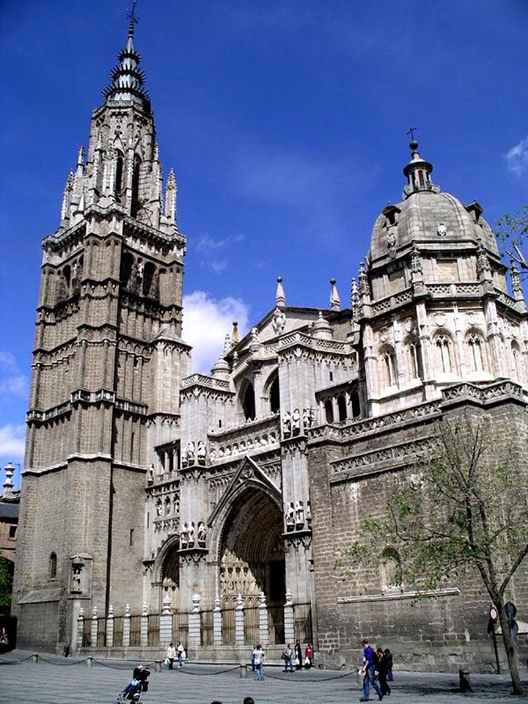
TOLEDO CATHEDRAL


"I just attended the SpainLifestyle lecture on Zoom about the Toledo cathedral. Karla gave us a very privileged guided tour of the cathedral, which is one of the most ornate cathedrals I have visited. Her knowledge of its history and architecture (inside and out) is immense. Karla's teaching style is easy and natural without elitist, hard to understand language. I would recommend you try her lessons."
* Jo Jouas, Denia


ADD YOUR EMAIL to Receive Invitations & Updates
* emails never shared or sold!
* indicates required


Karla Darocas as Educator


ADD YOUR EMAIL to Receive Invitations & Updates
* emails never shared or sold!
* indicates required


TOLEDO CATHEDRAL


"I just attended the lesson on the Cathedral of Toledo. I learnt to appreciate enormously the beautiful art portrayed in the Cathedral, the history behind every facet..all very interesting particularly when described in Karla's inimitable enthusiastic and knowledgeable way. Karla always puts her vast knowledge and enthusiasm into every class or lecture. I absolutely 1000% recommend her lessons."

* Diana Santiago, Xàbia

ADD YOUR EMAIL to Receive Invitations & Updates
* emails never shared or sold!
* indicates required